


How Hosts Can Manage Long-Term Guest Expectations on Airbnb Monthly Rentals
Table of contents
- Why Monthly Rentals Are Growing on Airbnb
- What Qualifies as an Airbnb Monthly Rental
- Who Books Monthly Stays
- Why Long-Term Guests Require a Different Hosting Approach
- Which Expectations to Align Before the Booking Is Confirmed
- How to Structure Communication with Long-Term Guests
- House Rules That Matter Most for Monthly Stays
- Amenities That Matter for Long-Term Stays
- Common Problems in Monthly Rentals
- Pros and Cons of Monthly Rentals for Hosts
- How to Prepare Your Property for Extended Stays
- How Monthly Rentals Affect Your Reviews
- When Monthly Rentals Are the Right Fit
Key Takeaways
- Airbnb monthly rentals (28 nights or more) attract a distinct guest profile: remote workers, digital nomads, relocating professionals, and seasonal travellers.
- Extended-stay guests carry higher day-to-day expectations around comfort, utilities, kitchen equipment, and internet reliability.
- Setting clear expectations before booking confirmation reduces mid-stay disputes and last-minute cancellations.
- Pre-arrival communication, a detailed house manual, and a defined check-in protocol are the three pillars of a smooth long-term hosting experience.
- Monthly discount pricing requires careful calculation; a steep discount applied without accounting for utility costs can shrink net income significantly.
- Fast, professional responses to maintenance requests during a long stay have a direct impact on the final review score.
- Monthly rentals work best for hosts in urban markets with year-round demand and properties that are genuinely equipped for full-time living.
Why Monthly Rentals Are Growing on Airbnb
Extended stays now represent roughly one in five nights booked on the platform globally. That share has climbed steadily since 2020, driven by remote work and location-independent professionals who prefer furnished, flexible accommodation over a standard lease.
For hosts, the economics are compelling. Airbnb’s own data shows that listings open to both short-term and long-term bookings generated about 45% more earnings on average than short-term-only properties. Fewer turnover cleans, lower transaction overhead, and predictable monthly cash flow are genuine benefits. The catch is that a guest staying 30 nights is not simply a short-term guest with extra luggage. Their expectations, their behaviour, and the problems that can emerge are qualitatively different. Hosts who approach monthly bookings with a short-term mindset tend to collect the most friction-filled reviews.

What Qualifies as an Airbnb Monthly Rental
Any booking of 28 nights or longer falls under the extended-stay category on Airbnb. The platform’s policies shift at that threshold: guests can pay in monthly installments instead of upfront, Airbnb adjusts its service fee calculation, and local tenancy protections may apply depending on your jurisdiction.
Unlike a standard short-term booking, a monthly stay functions more like a temporary home. Guests will cook daily, work from the property, and potentially receive occasional visitors. Hosts who set up both the space and the communication structure accordingly tend to attract better guests and collect stronger reviews.
Who Books Monthly Stays
Understanding your likely guest profile shapes every hosting decision.
- Remote workers and digital nomads are the largest segment. They need fast, reliable Wi-Fi above almost everything else, and a dedicated workspace is a close second. These guests tend to be self-sufficient and respectful of house rules; many become repeat bookers at properties where the setup genuinely supports daily productivity.
- Relocation guests are in transition: a job move, a renovation, or a cross-country move without permanent housing yet secured. Comfort and functionality matter more to them than décor, and they bring a heightened emotional investment in the space.
- Corporate travellers on extended assignments prioritize proximity to their office and a kitchen equipped for daily cooking. Many operate under per diem expense policies and prefer hosts who can provide a formal receipt.
- Seasonal guests include snowbirds from colder provinces booking warm-weather markets in Florida or the UAE, and travellers following festivals, sports seasons, or academic calendars. They book well in advance and compare listings carefully before committing.
Read more about:
- Airbnb for Remote Workers: Create a Work‑Ready Listing to Boost Bookings
- Modifying Your Airbnb Property for Digital Nomads: A Comprehensive Guide
Why Long-Term Guests Require a Different Hosting Approach
A guest staying three nights will tolerate a slow shower drain or a squeaky cabinet. Someone staying six weeks will not. Minor issues invisible during short bookings become genuine frustrations when a person is living in the space full time.
There are also more touchpoints. A long-term guest will message more often, not because they are difficult, but because more things happen over 30 days. A lightbulb burns out. The washing machine door sticks. Each small moment is an opportunity to demonstrate good hosting or to erode trust. Questions about what the booking covers also become far more pressing; monthly guests almost always ask whether utilities are included, whether cleaning is provided, and whether they can have visitors.
Which Expectations to Align Before the Booking Is Confirmed
The most effective time to manage expectations is before the guest clicks “confirm.” Several topics should be addressed in your listing description and revisited in your pre-booking message.
- What the rate includes. Specify whether utilities are part of the price or whether usage above a set threshold is the guest’s responsibility. Many hosts set a monthly electricity cap (around $80 to $100) and ask guests to cover overages. Document this in writing before confirming.
- Cleaning frequency. Monthly guests do not generally expect a weekly turnover clean at no extra cost. State your policy clearly: whether you offer mid-stay cleans, how often, and whether they are included or priced separately.
- Visitor and access policies. Be explicit about overnight visitors and, separately, about the notice you’ll give before entering the property for maintenance. Vague terms in either area generate mid-stay friction far more often than clear written rules do.
How to Structure Communication with Long-Term Guests
Good communication over a multi-week stay is about quality and timing, not frequency.
- Before confirming: Send a short message covering the key terms and asking whether the guest has specific requirements. This exchange reveals whether they are communicative and reasonable.
- Before arrival: Send a detailed pre-arrival message 48 to 72 hours before check-in covering entry, parking, Wi-Fi credentials, and a link to the house manual. Flag anything that needs explanation upfront.
- During the stay: A brief check-in at the 7-day mark is appropriate and usually appreciated. Keep it open-ended. After that, respond promptly to messages but let the guest set the pace of contact.
- Privacy: Avoid drop-in visits without prior notice. Professional distance signals respect for the space a long-term guest has made their own.
House Rules That Matter Most for Monthly Stays
Standard short-term rules form a reasonable foundation, but several points need more specific treatment for extended bookings. Covering these explicitly in your listing description and house manual prevents most mid-stay disputes.
- Cleanliness and upkeep. Ask guests to maintain the property in reasonable condition and to report any damage or malfunction within 24 to 48 hours of discovery. This protects both parties if a resolution is needed after checkout.
- Noise and neighbours. In multi-unit buildings, long-term guests sometimes settle into routines that gradually push toward the edges of acceptable behaviour. State quiet hours clearly and flag any building rules that apply to residents rather than short-stay visitors.
- Visitors. Specify whether overnight guests are permitted, how many, and for how long. A blanket “no unregistered overnight guests” rule is straightforward and enforceable; vague policies invite creative interpretations.
- Appliance and utility use. Note which appliances are available for daily use and whether anything is off-limits (a second freezer, a wine fridge stocked by you). If a utility cap applies, state the threshold and the billing process in plain language.
- Host and contractor access. Commit to providing at least 24 hours’ notice before entering the property for maintenance or inspections, except in genuine emergencies. Guests staying long-term have a strong expectation of privacy; this rule protects that expectation while keeping your ability to service the property intact.
Amenities That Matter for Long-Term Stays
| Amenity | Why It Matters for Monthly Guests |
| Fast, stable Wi-Fi (100 Mbps+) | Non-negotiable for remote workers, directly affects review scores |
| Dedicated workspace | Desk, chair, adequate lighting, accessible power outlet |
| Fully equipped kitchen | Full cookware, sharp knives, coffee maker, pantry staples |
| In-unit or on-site laundry | Guests will do laundry weekly; shared building machines must be clearly signposted |
| Adequate storage | Wardrobe with hanging space, chest of drawers, luggage area |
| Comfortable mattress and bedding | Quality sleep across multiple weeks has a measurable impact on reviews |
| Streaming service or smart TV | Leisure and downtime matter over a long stay |

Common Problems in Monthly Rentals
- Higher utility consumption is the most frequent financial surprise. A guest cooking three meals a day runs appliances far more than a weekend visitor does. If utilities are included in your flat rate, price accordingly or set a clear cap before confirming.
- Maintenance requests arrive mid-stay rather than between bookings, which means a guest is living around the problem while waiting for a fix. A broken washing machine or a faulty hob is a minor inconvenience in a hotel; in a home someone is using daily, it becomes the main thing they think about. Have a short list of trusted local contractors ready before the stay begins, not after the first request lands.
- Cleaning disputes usually stem from hosts expecting hotel-standard upkeep and guests expecting the tolerance of a normal household. Neither expectation is stated explicitly, so neither is met. Including a brief cleaning section in your house manual with two or three concrete expectations (such as keeping dishes washed and taking out bins on collection day) sets a shared baseline without sounding accusatory.
- Extension requests can be a good problem to have, but only if your calendar and pricing allow it. Prepare a clear answer in advance on whether you can accommodate additional weeks and at what rate.
- Expectation misalignment is the root cause of most negative long-stay reviews. Every issue above traces back to a single point: hosts who set clear expectations before check-in collect fewer conflicts and stronger ratings.
Pros and Cons of Monthly Rentals for Hosts
| Pros | Cons |
| Predictable monthly income | A discounted nightly rate reduces per-night revenue |
| Fewer turnovers and lower cleaning costs | Higher utility consumption if included in the rate |
| Less calendar management overhead | A longer commitment limits short-term booking flexibility |
| More stable occupancy during slow periods | Maintenance issues are more likely to arise mid-stay |
| Attracts professional, lower-risk guest profiles | Tenancy law protections may apply in some jurisdictions |
How to Prepare Your Property for Extended Stays
- Internet: Test your Wi-Fi speed before listing. Anything below 50 Mbps will draw complaints from remote workers; 100 Mbps or faster is the target. A dedicated workspace, even a modest desk and chair, signals clearly that the listing supports remote work.
- Storage: Guests staying a month will unpack. A wardrobe with genuine hanging space, a chest of drawers, and a clear area for luggage are necessities, not extras.
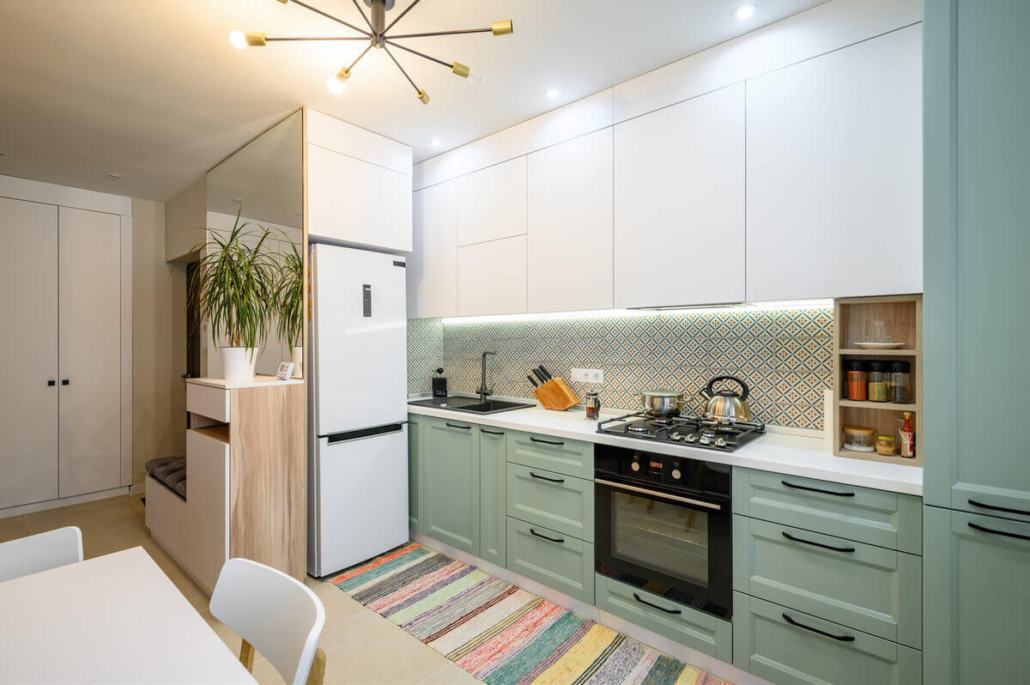
- Kitchen: Stock it for daily cooking: sharp knives, a saucepan set, a frying pan, a cutting board, and a functional oven. Add pantry basics (oil, salt, pepper, coffee) and the experience immediately improves.
- Written instructions: Prepare a house manual covering appliance use, bin schedules, parking, building access, and your contact details. Clear instructions reduce mid-stay messages considerably. For guidance on structure and content, see our Airbnb house manual guide.
How Monthly Rentals Affect Your Reviews
A guest staying 30 or 60 nights forms a detailed picture of your property. Small deficiencies that a short-term guest might overlook become familiar frustrations when someone encounters them every day. A sticky lock, a dim bathroom light, or inconsistent hot water can each surface in a review if left unaddressed.
Speed of response matters more here than on short bookings. If something breaks and you resolve it within 24 hours, a long-term guest will almost certainly mention your responsiveness. If you take three days to reply, they will mention that too. For hosts managing multiple properties, centralized guest communication that flags messages immediately is essential. Professional Airbnb property management services handle exactly this kind of responsive, round-the-clock support.
When Monthly Rentals Are the Right Fit
Not every property or host is suited to extended bookings. Monthly rentals work best when the property is in a city with consistent year-round demand (urban centres, business districts, university towns, or warm-weather destinations), the listing supports daily living with a functional kitchen and laundry access, and you can respond to maintenance requests within a business day. Clear, documented house rules in the listing description before guests make contact are a prerequisite.
Properly structured, Airbnb monthly rentals deliver steady income, lower operational load, and the kind of hosting experience that produces reliable reviews. Most of the work is front-end: set the right expectations before anyone checks in, prepare the space for full-time living, and communicate professionally throughout.