
How to Set Up an Airbnb for Remote Work: What Modern Guests Expect
Table of contents
- Why Remote Workers Choose Airbnb Over Hotels
- What Modern Remote Workers Expect From Your Listing
- Core Workspace Elements That Remote Workers Notice Immediately
- What Long-Term Stays Specifically Require
- How Wi-Fi Affects Bookings
- How to Design Your Airbnb for Productivity and Comfort
- Common Mistakes Hosts Make
- How a Remote-Work-Friendly Airbnb Affects Your Revenue
- Conclusion
Key Takeaways
- Remote workers and digital nomads represent a growing share of Airbnb demand; long-term stays (28+ nights) account for 23% of North American bookings.
- A dedicated workspace is one of the top amenities remote guests filter for before booking; a dining table does not qualify.
- Wi-Fi speed and reliability are non-negotiable; guests increasingly verify download speeds above 50 Mbps before confirming a stay.
- Ergonomic seating, natural lighting, and multiple power outlets are the three workspace details remote workers mention most often in reviews.
- Long-term guests require functional kitchens, adequate storage, and ventilated spaces that support daily routines over weeks.
- Work-friendly listings attract midweek bookings, which fill the calendar gaps that leisure travelers typically leave empty.
- Adapting an Airbnb for remote work requires upfront investment in the $500–$2,000 range but can increase monthly revenue and reduce vacancy.
- The setup works best for condos and larger cabins; small, poorly lit spaces face structural limits regardless of added amenities.
Introduction
Remote work changed the economics of short-term rental hosting. Long-term bookings of 28 nights or more now represent 23% of all Airbnb nights booked in North America, driven largely by professionals who need a functional workspace wherever they stay. As a result, hosts who adapt accordingly are pulling ahead on occupancy, nightly rates, and reviews.
Professionals stopped treating their home office as the only productive option. A distinct traveler type followed: someone who books an Airbnb to work, meet deadlines, and recover between Zoom calls. Industry data calls this pattern a “workation”: work-focused accommodation that replaces a fixed home office. MBO Partners’ 2024 State of Independence report counted over 18 million Americans who identify as digital nomads. Meanwhile, a Robert Half survey found 88% of U.S. employers offer hybrid or remote arrangements, sustaining a durable booking pool that hotels consistently fail to serve well.
Remote workers also book differently from leisure guests. Specifically, they stay longer, fill midweek slots, and rarely leave once a setup meets their needs.
Explore Techniques to Accommodate Airbnb Business Travelers.
Why Remote Workers Choose Airbnb Over Hotels
Hotels offer consistency. Airbnb, however, offers space, and space is what productive remote work requires.
A standard hotel room gives guests a narrow desk, shared Wi-Fi, and no kitchen. Working there for a week means eating out every meal and concentrating in a space designed for eight-hour stays. Most professionals hit that ceiling within two days. Airbnb, by contrast, offers full kitchens, separate living zones that create a mental boundary between work and rest, and self-check-in that eliminates lobby friction at 7 a.m. These advantages explain why Airbnb’s share of corporate travel bookings climbed from 28% in 2019 to 44% by 2024.
What Modern Remote Workers Expect From Your Listing
Expectations have matured considerably. Early remote workers appreciated any desk near a window. By 2025, however, they expected specific, testable standards.
- Reliable Wi-Fi is the single most critical factor. Remote guests filter by “dedicated workspace” and read reviews specifically for connectivity complaints. A 50 Mbps minimum download speed, for instance, handles video calls and file transfers simultaneously. Publishing your actual speed with a screenshot from a speed test, however, builds trust before guests click “Book.”
- A proper desk and ergonomic chair matter more than square footage. Guests spend six to ten hours at that desk daily. A decorative café table with a wooden chair, for example, becomes a physical problem by day three. A desk under 100 cm wide forces guests to choose between a laptop and a notebook.
- Quiet and long-stay comfort are equally important. Where full soundproofing isn’t possible, blackout curtains and a white noise option address the most common complaints. Long-stay guests notice quickly when a space was designed for weekend visits only. Adequate storage, a washing machine, and a well-stocked kitchen are, therefore, baseline expectations for anyone booking beyond seven days.
Check out Airbnb Tips & Tricks for Hosts: Maximize Revenue, Occupancy & Efficiency.
Core Workspace Elements That Remote Workers Notice Immediately
The workspace is the first thing a remote guest assesses after dropping their bag. Get it right, and everything else about the stay starts well.
A desk of at least 100 cm width with clear surface space, an ergonomic chair with lumbar support, a desk lamp with adjustable color temperature, and a power hub with USB-A and USB-C ports are the four components that generate the most review mentions. Notably, they appear both as positives when present and as complaints when absent.
| Workspace Feature | Why Remote Guests Notice It | Host Action |
| Desk width under 90 cm | No room for laptop and notebook side by side | Replace or add a clip-on shelf |
| Non-adjustable chair | Back pain by day two; appears in reviews | Swap for a mid-range ergonomic model |
| Single power outlet at desk | Daily replug frustration | Add a desktop USB hub or power strip |
| No desk lamp | Evening work requires overhead glare | Add a warm/cool LED desk lamp |
| Screen glare from window | Afternoon productivity drops | Add a side curtain or shift desk angle |
| No monitor option | Freelancers, developers and designers book elsewhere | Add a 24-inch HDMI monitor on a swing arm |
Must-Have Amenities for a Work-Friendly Airbnb
Beyond the desk, certain amenities consistently separate functional listings from ones remote guests actively seek out.
Self-check-in via smart lock removes a scheduling dependency that professionals find stressful; many, in fact, arrive after a full workday. A dedicated Wi-Fi password card displayed at the workspace, rather than buried in the app, sets the right tone immediately. A quality coffee setup (drip machine, French press, or pod system) earns positive review mentions from guests who start their workday before 8 a.m. In addition, clear appliance and workspace instructions in your Airbnb welcome guide reduce friction for guests who want to settle in and get working without troubleshooting.
What Long-Term Stays Specifically Require
A guest staying 14 to 30 days needs the listing to function more like an apartment than a vacation rental. In particular, several practical details matter that short-stay guests rarely raise.
- Storage means a full-length wardrobe, not just hooks. Remote guests arrive with clothes for professional and social contexts; forcing them to live from a suitcase for three weeks, therefore, reads as a gap in planning.
- A functional kitchen with two burners, a full-size refrigerator, basic cookware, and a sharp knife covers the minimum. Notably, Airbnb identifies a well-equipped kitchen as one of the most searched filters for long-stay bookings.
- Laundry access is a practical necessity beyond one week; guests who cannot wash clothes on-site book shorter and return less often.
- Stable internet throughout the unit is worth a mesh router investment of under $80.
How Wi-Fi Affects Bookings
Wi-Fi is the one amenity where a single negative review can structurally suppress bookings across an entire listing.
A “fast Wi-Fi” tag creates a specific expectation. Consequently, one review mentioning “constant disconnections” collapses it for every future guest. Publishing a real speed test screenshot in your photo gallery is, therefore, one of the highest-leverage actions for a host targeting remote workers. Test from the desk itself, not just the entry hall, and upgrade your router annually.
How to Design Your Airbnb for Productivity and Comfort
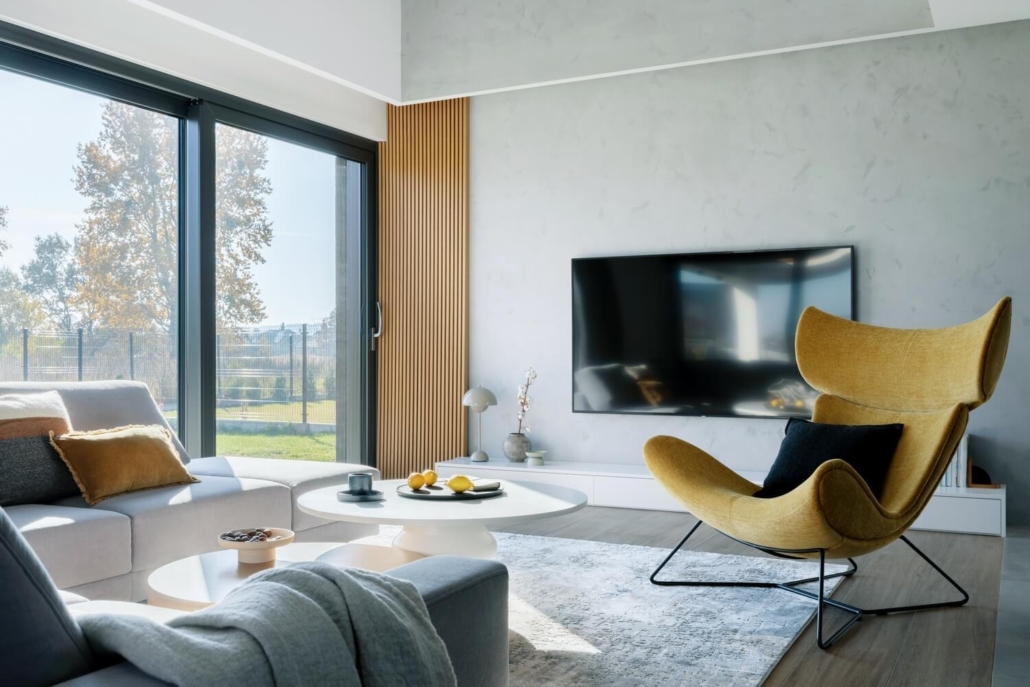
Minimalism is a practical advantage here, not just an aesthetic preference. Clutter near the desk creates visual noise that reduces focus; removing decorative objects from work surfaces costs nothing and, moreover, immediately improves listing appeal to remote guests.
Neutral colors in the workspace zone (white, light gray, warm beige) reduce eye fatigue during long sessions. Layered lighting combining ambient ceiling light on a dimmer, natural side light, and a desk lamp lets guests adjust brightness across a full workday. Zone separation between the work area and sleeping area matters even in a studio. Positioning the desk away from the bed, for instance, creates a boundary that guests consistently mention in positive reviews.
Common Mistakes Hosts Make
- Using a dining table and chair as the “workspace” is the most frequent complaint from remote workers. It signals the host added the dedicated workspace tag without thinking about eight hours of actual daily use.
- Claiming fast Wi-Fi without verifying it from the desk generates the most damaging reviews in this segment.
- Similarly, no power outlets near the workspace force guests to run extension cords across floors, appearing in reviews as both a safety concern and a daily inconvenience.
- Overhead-only lighting causes screen glare within hours.
- Missing long-stay storage, on the other hand, surprises hosts with otherwise solid setups; a weekend guest forgives a small closet, but a three-week guest does not.

How a Remote-Work-Friendly Airbnb Affects Your Revenue
The financial case for adaptation is strongest for hosts with consistent midweek vacancy. Specifically, remote workers book Tuesday through Thursday nights that leisure travelers ignore, and filling those gaps without reducing weekend rates is one of the clearest paths to increasing Airbnb revenue without competing on price alone. Search conversion rates on workspace-filtered queries also improve as a result.
Longer stays also reduce operational costs significantly. One 14-night booking, for example, requires a single turnover instead of the five or six that a sequence of short stays generates. Work-friendly listings can, therefore, add weekly and monthly discount tiers (typically 30–40% below the nightly rate) that attract 28-day bookings while maintaining a higher ADR than comparable long-term rentals. A structured Airbnb pricing strategy combining dynamic weekend rates with stable monthly discounts works well for this guest profile. In addition, more reviews from longer stays support the rating metrics needed for Superhost status.
| Property Type | Fit for Remote Workers | Key Consideration |
| Studio apartment | Moderate | Works if desk zone is genuinely separate from bed |
| 1–2 bedroom condo | High | Clear room separation, kitchen, reliable internet |
| Rural cabin | High (with caveats) | Privacy and quiet are assets; verify cellular backup for outages |
| Country house | High | Space and quiet are ideal; local internet speeds are the main risk |
Should You Adapt Your Airbnb for Remote Work?
Reasons to adapt:
- access to a guest segment that books midweek and extended stays;
- lower cost per night from fewer turnovers;
- opportunity to introduce monthly pricing without dropping ADR;
- higher search ranking for workspace-filtered queries;
- stronger review scores from guests whose expectations were met.
Reasons for caution:
- initial investment of $500–$2,000 depending on current setup;
- structural limits in small or poorly lit properties;
- sensitivity to return-to-office trends (Robert Half Q1 2026 data shows a gradual rise in on-site postings);
- and a different hosting rhythm for hosts accustomed to frequent short turnovers.
Overall, the adaptation makes the most sense for hosts with 1-bedroom or larger units in urban markets with consistent midweek vacancy.
Conclusion
Remote work created a durable Airbnb guest segment with specific, verifiable standards. Long-term stays represent 23% of North American bookings; corporate travel reached a 44% platform share in 2024; and dedicated workspace ranks among the most searched listing filters today.
Hosts who build a genuine workspace and invest in reliable internet consistently attract longer bookings, stronger reviews, and fewer vacancy gaps. That said, if managing all of this feels like a significant operational shift, professional property management can handle the transition.