

Airbnb Guest Theft: What Hosts Should Do Before and After an Incident
Table of contents
- What Kinds of Theft Airbnb Hosts Face
- Why Theft Happens in Short-Term Rentals
- Which Properties Are Most Vulnerable
- Preparing Your Property for Incidents
- The Role of House Rules in Preventing Theft
- Technology That Protects Your Property
- What to Do Right After Discovering a Missing Item
- How to Communicate With the Guest After a Loss
- When to Use the Resolution Center
- Common Host Mistakes After a Theft Incident
- How to Minimise Financial Losses Over Time
- Should You Worry About Guest Theft?
- Conclusion
Key Takeaways
- Small items like towels, kitchen utensils, and portable speakers account for the majority of reported theft cases in short-term rentals.
- Timestamped pre-arrival photos are your single strongest asset when supporting a damage or theft claim.
- AirCover for Hosts covers guest-caused theft up to $3 million, but only when documentation and filing deadlines are met.
- Claims must reach the Airbnb Resolution Center within 14 days of checkout or before the next guest checks in, whichever comes first.
- Party-friendly properties and premium listings with visible high-end equipment carry a meaningfully higher theft risk than standard urban apartments.
- Contacting the guest directly before escalating to Airbnb is a required first step, not an optional one, in the claims process.
- Sentimental or irreplaceable items cannot be compensated through any claims process; remove them before your first booking.
Introduction
Discovering something missing after a guest checks out is one of the more unsettling experiences in hosting. Sometimes it’s a single bath towel. Other times it’s a Bluetooth speaker or a decorative piece. Airbnb guest theft is not the norm. Most guests leave properties in good condition. But incidents happen often enough that every host benefits from a clear system, built before any problem arises.
This guide covers what hosts most commonly lose and which listings carry the greatest exposure. It also covers how to protect your property ahead of time and what to do when something goes missing.
What Kinds of Theft Airbnb Hosts Face
Not all missing items represent deliberate theft, but the financial effect is identical regardless of intent.
- Linens and towels top the list of reported losses. A guest may pack a favorite towel by mistake or take one deliberately. Either way, the inventory gap falls on the host.
- Kitchen items are close behind: cutlery, wine glasses, coffee accessories, and small tools disappear with surprising regularity.
- Small electronics are also frequently targeted. Bluetooth speakers, USB chargers, and remote controls are lightweight and easy to slip into a bag.
- Decorative pieces including candles, framed prints, and ornamental objects go missing from certain property types.
- Consumable supplies left in bulk (spare toiletries, coffee pods, and laundry tablets) are overused or removed more often than most hosts expect.
Larger losses, such as televisions or laptops, occur less often but carry greater financial impact and are harder to resolve without strong documentation.
Why Theft Happens in Short-Term Rentals
Several factors make vacation rental properties more vulnerable than hotel rooms.
Guests check in with a degree of anonymity a staffed hotel cannot offer. High booking volumes mean many people cycle through the same space. As a result, individual accountability is harder to maintain across dozens of bookings. Long stays amplify exposure: a guest who books three weeks has far more opportunity to assess and remove items than someone staying two nights.
Some properties are simply unprepared. Without a written inventory or baseline photography, losses are hard to detect and nearly impossible to prove. A missing item costs money regardless of intent.

Which Properties Are Most Vulnerable
Large group houses see more incidents than compact apartments. More people share the space; individual responsibility is diluted across the group. Properties marketed toward celebrations carry the same elevated risk. Premium listings with visible high-end appliances are sometimes specifically targeted. Similarly, any property with portable expensive gear (audio equipment, gaming consoles, quality kitchen tools) holds higher inherent risk.
Extended stays also deserve particular attention. A long-term guest has time to assess what is available and check if the host tracks items closely.
What Most Often Goes Missing
| Property type (risk profile) | Why it’s vulnerable | Item categories most frequently targeted | Typical examples |
| Large group houses | Multiple guests, shared responsibility, weak item tracking | Linens & textiles; Kitchenware; Consumables | Bath towels, duvet covers, pillows; cutlery sets, wine glasses, serving tools; coffee pods, toiletries |
| Party or celebration rentals | High turnover during stay, reduced oversight, careless use | Glassware & bar items; Small kitchen appliances; Portable electronics | Champagne glasses, bottle openers; coffee machines, blenders; Bluetooth speakers, chargers |
| Premium/luxury listings | Visible value signals increase selective targeting | Electronics; Designer decor; High-quality homeware | Smart speakers, tablets, remote controls; art pieces, decorative objects; premium cookware, branded tableware |
| Tech-heavy or entertainment-focused homes | Easy-to-remove devices and gaming/media gear | Gaming & media devices; Audio equipment; Connectivity accessories | Game controllers, consoles, VR headsets; soundbars, portable speakers; HDMI cables, chargers, adapters |
| Extended-stay rentals | Time to observe inventory patterns and weak tracking systems | Everyday consumables; Reusable household stock; Small replaceable items | Cleaning supplies, detergent pods; towels, sheets, kitchen basics; toiletries, pantry staples |
| Minimal-supervision apartments (self check-in units) | Low physical oversight between guests, limited real-time accountability | Mixed small-value items across all zones | Missing items across linens, kitchen tools, decor, electronics without pattern |
How to Reduce Risk Before Your First Booking
- Remove what cannot be replaced. Personal belongings and sentimental items have no place in a rental. Compensation through AirCover or private insurance covers market value; it cannot replace what those items represent.
- Choose durable, replaceable inventory. Mid-range towels and standard cutlery serve guests just as well as premium alternatives and cost far less to replace. Treating inventory as a variable cost changes how you respond to losses.
- Lock service areas. Any storage space (cleaning supplies, spare linens, and maintenance tools) should remain inaccessible to guests. A simple keyed cupboard solves this at minimal cost.
- Stock consumables in practical quantities. Leaving 14 toilet rolls visible invites overuse. Two or three rolls with a small locked reserve covers most stays.
- Build a room-by-room inventory list. Document every item by category, description, and approximate value. This takes roughly an hour and becomes the foundation of any future claim.
Preparing Your Property for Incidents
Pre-stay photography is the most important habit a host can develop. Photograph every room from multiple angles before each arrival. Focus on high-value zones (electronics, art, kitchen equipment) and high-risk zones (linen storage, bathroom supplies). Timestamp the images and save them to cloud storage.
Run the same process after checkout. Side-by-side before-and-after evidence is the clearest possible basis for any theft or damage claim. Documentation requirements are covered in detail in the Airbnb damage policy explainer.
A cleaning checklist on every turnover catches missing items before the next guest arrives and before claim deadlines tighten.
The Role of House Rules in Preventing Theft
Clear house rules create accountability before a guest arrives. Rules covering property care, liability for missing items, and checkout expectations set a different tone than vague instructions.
When a claim is contested, a well-written rule set strengthens your position with Airbnb’s support team. Guests who see clearly defined expectations are less likely to treat ambiguous areas as permission. A structured Airbnb house rules template is a solid starting point. Adapt it to your property type and update it annually.
Technology That Protects Your Property
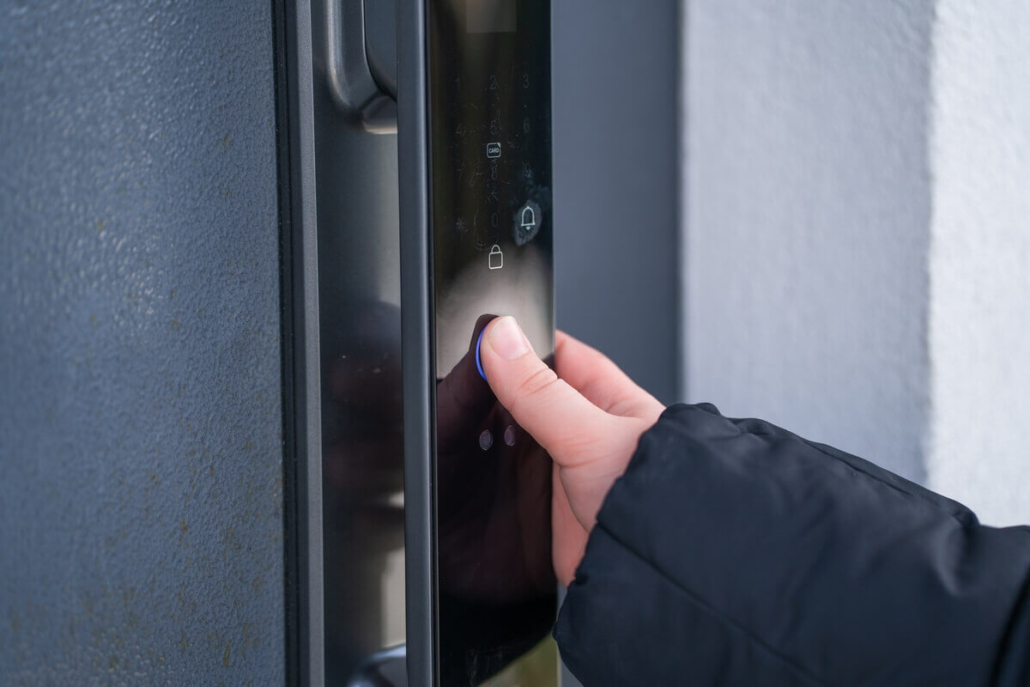
- Smart locks replace physical keys with unique, time-limited codes. Each guest receives a code that expires at checkout, eliminating copied-key risk and producing a precise entry log. Codes can be revoked remotely if a concern arises mid-stay.
- Exterior cameras at entry points are permitted under Airbnb’s current policy. Since April 2024, all interior cameras are strictly prohibited. A disclosed exterior camera at the front entrance is a meaningful deterrent. Placement rules, required disclosures, and compliant setup steps are covered in the Airbnb security cameras policy guide.
- Door and window sensors alert you to unexpected access outside the booked period.
- Noise monitors detect volume spikes that may signal an unauthorized gathering without capturing audio.
Explore Airbnb Party Policy: Rules, Restrictions, and What Hosts Should Know.
What to Do Right After Discovering a Missing Item
First, verify the absence. Items are sometimes relocated by cleaning staff or placed in unexpected drawers. Confirm the item is gone before acting.
Then compare the current state against your pre-arrival photographs. If an item appears before but not after, you have documented evidence. Write down the description, estimated value, purchase date, and any receipt or product link you can find.
For any loss above minor value, file a police report. Both Airbnb and most private insurance providers require one for theft claims, and it adds independent credibility to your case.
How to Communicate With the Guest After a Loss
Contact the guest through the Airbnb messaging system within 24 hours of checkout. Keep the message factual and calm. Note what is missing, say you are checking for a mix-up, and ask for clarification. Avoid accusatory language. A phrase like “I noticed [item] is no longer here” opens the conversation without assigning blame.
Many cases resolve here. Guests acknowledge a mistake, offer to return the item, or propose compensation. Regardless of outcome, your message creates a timestamped record that Airbnb Support can review if the case escalates.
Three common mistakes at this stage:
- sending an accusatory message
- communicating outside the Airbnb platform (external messages cannot be submitted as evidence)
- skipping direct contact before filing
When to Use the Resolution Center
If the guest does not respond or declines responsibility, submit your claim through Airbnb’s Resolution Center. The deadline is 14 days from checkout or before the next guest checks in, whichever comes first. Late submissions are rejected regardless of evidence quality.
A complete claim includes before-and-after photographs, a police report (for theft specifically), purchase receipts or current market links, and a clear itemized value for each loss. Vague or unpriced submissions are frequently rejected.
Our full guide to how to use the Airbnb Resolution Center covers the exact process, evidence categories that reviewers prioritize, and the follow-up timeline for escalations.
AirCover coverage and exclusions: Host Damage Protection reimburses guest-caused theft up to $3 million USD. Cash and securities are excluded. Coverage applies only to losses traceable to guest actions during a confirmed booking. AirCover is not a substitute for private short-term rental insurance; the two work best together.
Evidence to Collect After a Theft Incident
| Evidence Type | Why It Matters |
| Pre-arrival photos | Proves the item existed and was in good condition at check-in |
| Post-checkout photos | Documents absence or visible damage |
| Police report | Required for theft claims; adds independent credibility |
| Purchase receipts or market links | Establishes value and ownership |
| Airbnb message thread | Documents all guest communication |
Common Host Mistakes After a Theft Incident
- Sending an accusatory first message is the most damaging opening move. Hostile communication is noted by Airbnb Support and weakens an otherwise strong claim.
- Waiting too long. Hosts who delay confirmation and then wait for a response frequently miss the 14-day window. Act as soon as a loss is identified.
- Filing without evidence. A claim stating “the speaker is missing” with no photographs or receipts gives Airbnb nothing to work with.
- Communicating outside the platform. WhatsApp and email conversations are invisible to Airbnb reviewers. Every exchange must stay inside the app.
- Skipping direct contact. Airbnb requires that hosts contact the guest before escalating. Bypassing this step is grounds for automatic rejection.
How to Minimise Financial Losses Over Time
Build replacement costs into your operating budget from the start. Towels, kitchen items, and small electronics have a predictable attrition rate. Treating these as variable costs removes the surprise and supports cleaner profitability tracking.
Run a quarterly inventory check and update baseline photographs at the same time. This routine catches gradual losses before they compound.
Consider a dedicated short-term rental insurance policy alongside AirCover. Standalone policies typically cover scenarios AirCover excludes and provide a second recovery route if a platform claim is unsuccessful.
Should You Worry About Guest Theft?
Not disproportionately. The vast majority of Airbnb guests are respectful and leave properties in good condition. Theft incidents represent a small fraction of all stays. Most involve minor items that cost less to replace than the time a formal claim takes.
Generally, the hosts who handle incidents most effectively share one characteristic: their systems were already in place. Pre-stay photography, a written inventory, clear house rules, and familiarity with the Resolution Center process take a few hours to establish. They cost nothing when things go right and pay back whenever something goes wrong.
Conclusion
Airbnb guest theft is a manageable risk. Sound preparation reduces both the likelihood of an incident and the financial exposure when one occurs. Remove irreplaceable items, photograph inventory before each arrival, write clear house rules, and learn how AirCover works. When something does go missing, a calm, documented response gives you the strongest chance of a fair outcome. If maintaining all of this alongside everything else that comes with hosting sounds like a lot, professional property management handles these systems as a matter of course.