
Secure Your Airbnb with Smart Locks: The Ultimate Guide
Table of contents
- Why Smart Locks Matter for Airbnb Hosts
- Unveiling the Airbnb Smart Lock
- Understanding Smart Locks
- Operating a Smart Lock: The Fundamentals
- Smart Locks: The Security Quotient
- Enhancing Smart Lock Security
- Smart Lock Installation and Use
- The Role of Smart Locks in Airbnb Business
- Smart Locks and Airbnb’s Rules From November 20, 2026
- Installation and Familiarization of Smart Locks
- Top Smart Lock Brands for Airbnb Hosts in Canada
- The Bottom Line
- References
Key Takeaways
- Airbnb smart locks let guests check in with a unique code, with no key handover. For selected Schlage, August, and Yale Wi-Fi models, Airbnb can create and send that code automatically.
- For reservations booked on or after November 20, 2026, a lock app can only be optional. If a guest asks, you must give them another way in, such as a door code or key.
- Hosts generally can’t ask guests for contact details or fingerprints to unlock the door, so keep biometric features for owners and staff.
- A smart lock with a built-in camera counts as a recording device: it can’t view the interior and must be disclosed in your listing.
- Lock up at checkout is now one of Airbnb’s seven standard house rules, with room to say where keys go.
- In Canada, Wi-Fi smart locks from the brands in this guide start at around C$165. Kwikset’s Halo locks are sold here under the Weiser name.
Why Smart Locks Matter for Airbnb Hosts
In the sphere of Airbnb business strategy, vacation rental hacks, and short-term rental insights, one area has garnered tremendous attention: Airbnb smart locks. The concept of an Airbnb smart lock and the indispensable role it plays in every host’s property management routine warrant a comprehensive examination.
Demand is still climbing. IMARC Group puts the global smart lock market at US$3.56 billion in 2026. It expects the market to reach US$10.63 billion by 2034. North America is the largest regional market, with about 40.9% of sales in 2025.
For short-term rental owners, that growth means more choice and easier setup.
Let’s explore Airbnb smart locks, their role in modern property management, and the brands worth considering. We’ll also cover how to secure your Airbnb with smart locks, stay within Airbnb’s rules, and handle common hurdles.
Unveiling the Airbnb Smart Lock
Typically, any retail smart lock available on the market can be installed on your Airbnb rental property. The benefits of smart locks are manifold: facilitating key exchanges, easing maintenance access, and enhancing general safety for hosts, guests, and the property management team.
To understand these advantages, let’s dive deeper into the nature of smart locks.
Explore the Tips on How to Make Your Airbnb Rental Business Safer.
Understanding Smart Locks
Smart locks represent a blend of traditional and electronic mechanisms. They offer flexibility in terms of installation, either replacing the conventional lock entirely or complementing it. Apart from the digital system, some smart locks can be operated with a backup physical key. On the inside, buttons or regular thumb turns can lock or unlock intelligent locks.
Operating a Smart Lock: The Fundamentals
Depending on the model, smart locks incorporate several unlocking methods. These include user codes (which encompass one-time passwords), biometrics (like fingerprints and voice recognition), mobile and web app commands, and geofencing. For guests, stick to codes or keys. Airbnb’s policy doesn’t allow hosts to ask guests for biometric data such as fingerprints. Keep fingerprint and voice features for yourself and your team.
Smart Locks: The Security Quotient
Reputable brands encrypt the data that travels between the lock, your phone, and the manufacturer’s servers. No connected device is immune to attack, though. The safeguards on your side matter as much as the lock. Update the firmware and app, protect your lock account with two-step verification where the app offers it, and retire each guest’s code after checkout. Additional security features may include smudge-resistant keypads, alarms, auto-lock, tamper alerts, built-in cameras, and more. Airbnb treats a built-in camera as a recording device. It can’t view any part of the interior and must be disclosed in your listing (see our Airbnb camera policy guide). Smart lock apps also keep activity logs, so you can review entries, departures, and failed unlocking attempts.
Enhancing Smart Lock Security
It’s advisable to activate all the security features offered by your chosen smart lock. Additionally, you can control the smart lock settings via its accompanying software, and many smart locks are compatible with popular virtual assistants and smart hubs.
Smart Lock Installation and Use
Smart locks can be installed wherever needed, from the front door to kitchen cabinets. Most run on batteries, so a power outage won’t stop the keypad from working, although remote access over Wi-Fi may drop until the power returns. Battery life depends on the model: Schlage, for example, rates the Encode at up to six months and the Connect at up to a year. Most smart locks also send an alert when the batteries are running low.
Installing a smart lock is relatively straightforward, and most people can manage it with a screwdriver and some user-friendly software.
The Role of Smart Locks in Airbnb Business
Smart locks can substantially streamline your Airbnb business operations.
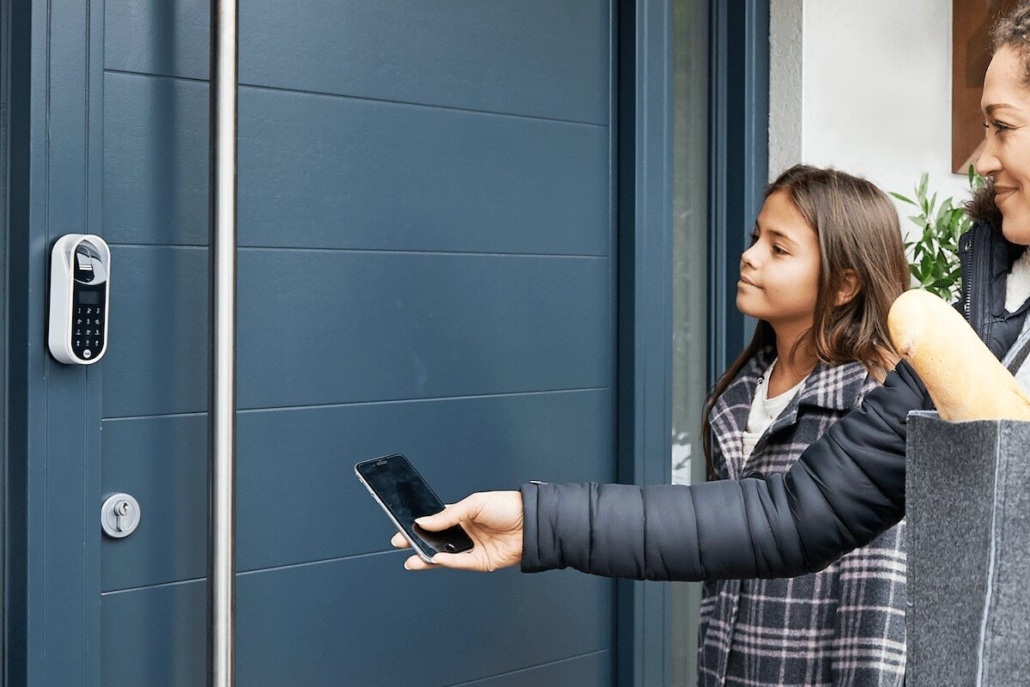
- Facilitating Self-Check-in. With a smart lock, guests can let themselves in at any hour, with no key handover to coordinate. The simplest setup is a unique keypad code that works only during the stay. If your lock is connected to Airbnb, the platform creates that code and sends it to the guest for you. A free app for the lock, such as a virtual key, can still be offered, but only as an option. Airbnb’s rules change for reservations booked on or after November 20, 2026. If you offer a keyless entry app, guests who ask must get another way in, like a code or key. Decide on that backup before your first booking rather than when a guest is already at the door. For the full arrival routine, see our Airbnb check-in instructions.
- Streamlining Property Maintenance. Smart locks let owners give team members different access levels. You can also issue temporary codes to hired workers and send emergency codes when needed.
- Choosing the Right Smart Lock. When selecting a smart lock, consider options with multiple access methods, combining remote access, keypad entry, and an additional physical keyhole. Fingerprint access, voice recognition and geofencing are tempting, but a rental doesn’t need them, and they usually raise the price.
- Stay clear of extremely low-cost options. In Canada, Wi-Fi locks from the brands below start at around C$165. Pick a model from a reputable brand. Make sure it supports remote access and works with your phone and your property management software. For eligible listings in the US and Canada, Airbnb can also connect directly to selected Wi-Fi models from Schlage, August, and Yale. Once connected, each guest gets a unique code that works only during their trip. You also add a backup entry method in case of lock problems, such as dead batteries. Plenty of code slots, a one-touch locking button, and a backlit keypad help, especially for late arrivals.
Smart Locks and Airbnb’s Rules From November 20, 2026
Airbnb is tightening what hosts can require of guests for every reservation booked on or after November 20, 2026. Several of the changes touch smart locks directly, so check your setup against each point below. For the wider picture, read our guide to Airbnb’s new house rules policy.
- No mandatory app or account to get in. With limited exceptions, guests can’t be required to use a third-party app or register on another website. That covers entering your place and reaching a critical amenity. Registration-based keyless apps can stay as an option if a guest who asks gets another way in. Apps that simply add comfort during the stay, like a speaker or thermostat app, can stay optional extras.
- No personal data for lock access. Airbnb generally doesn’t let hosts ask guests for contact details, like an email or phone number. Biometric data, such as fingerprints, is off limits too. Send a code instead of asking a guest to create a lock account or enroll a fingerprint.
- The exceptions need disclosure. If local law or a documented building or HOA rule makes an app or registration unavoidable, Airbnb allows it. Explain what guests must provide and why in your listing’s additional rules section.
- Lock up at checkout is a standard house rule. It’s now one of seven standard rules in the Listing editor. You can add optional details, such as where to return keys. Every rule must be on the listing before booking, not added later by message, sign, or in person.
- Advertised spaces stay open to guests. Airbnb generally doesn’t allow hosts to restrict access to a feature that’s advertised as part of the listing. If a smart lock guards a listed garage, gym or storage room, guests need a way to open it too.
Installation and Familiarization of Smart Locks
Most smart locks need only a screwdriver to install, but you can hire a reputable handyman if you’re unsure. Ask for a quote upfront. The cost depends on your door and whether it needs drilling or a new deadbolt. After installation, take time to read through the manual and understand the lock’s functionalities to maximize its potential.
Top Smart Lock Brands for Airbnb Hosts in Canada
Below are four brands worth a look. For each, you’ll find typical Canadian prices, standout features, host perks and notable models. Prices are rounded from Amazon.ca in November 2026 and change often.
August

Typical Price in Canada: about C$220 to C$250 for the August Wi-Fi Smart Lock with a keypad
Why We Like the Brand: August offers a wide range of smart lock options that are known for their sleek designs and compatibility with various door types. They provide advanced features like keyless entry, remote access control, and seamless integration with popular home automation systems.
Perks for Short-Term Rental Hosts: Several August models with Wi-Fi and a keypad can be linked straight to Airbnb. Airbnb then sends each guest a unique entry code automatically. The August app lets you manage access remotely and review entry and exit activity. Virtual keys suit you and your team. For guests, offer them as an option and keep the keypad code ready.
Notable Models:
- August Wi-Fi Smart Lock: Fits over your existing deadbolt and has Wi-Fi built in, so no separate bridge is needed. It works with Amazon Alexa, Google Assistant and Siri. Add a keypad so guests can enter with a code.
- August Smart Lock + Connect Wi-Fi Bridge: The standard August lock paired with a plug-in bridge that adds Wi-Fi for remote control. With a keypad, this combination can also connect directly to Airbnb.
Yale

Typical Price in Canada: about C$200 to C$390 for the Assure Lock 2 line. Wi-Fi models, which Airbnb can connect to, start at around C$290
Why We Like the Brand: Yale is a trusted and well-established brand in the security industry. Their smart locks offer a wide range of features, including keyless entry, voice control compatibility, and integration with popular smart home ecosystems. Yale locks are known for their robust construction and reliability.
Perks for Short-Term Rental Hosts: Yale’s app lets hosts create a unique entry code for each guest. This feature enables hosts to monitor access, receive notifications, and easily revoke access once the guest’s stay is complete.
Notable Models:
- Yale Assure Lock 2 with Wi-Fi: The current generation of the Assure line. It comes with a push-button keypad, a touchscreen, or a fingerprint reader for owners and staff. Wi-Fi versions connect directly to Airbnb for automatic guest codes.
- Yale Approach Lock with Wi-Fi: Works with both the August and Yale Access apps. Paired with a keypad, it’s also on Airbnb’s list of locks that connect directly.
Schlage

Typical Price in Canada: about C$250 to C$400
Why We Like the Brand: Schlage is known for its durable and high-quality locks. Their smart locks offer a range of features, including keyless entry, remote access, and compatibility with popular smart home platforms. Schlage locks are praised for their easy installation process and stylish designs.
Perks for Short-Term Rental Hosts: Encode models store up to 100 unique access codes, so you can give each guest temporary access. Both models below have a built-in alarm that senses potential door attacks. The Encode and Encode Plus Wi-Fi deadbolts can also connect directly to Airbnb.
Notable Models:
- Schlage Encode Smart Wi-Fi Deadbolt: This lock connects directly to your home’s Wi-Fi network, eliminating the need for additional hubs or bridges. It offers remote access control, voice assistant compatibility, and a built-in alarm.
- Schlage Connect Smart Deadbolt: This model uses Z-Wave technology to integrate with popular smart home systems. It provides keyless entry, can store up to 30 access codes, and has a built-in alarm to deter potential intruders.
Kwikset (Weiser in Canada)

Typical Price in Canada: about C$165 to C$240 for Weiser Halo models
Why We Like the Brand: Kwikset offers a wide range of smart lock options that blend traditional lock designs with modern technology. Their smart locks are known for their ease of installation, user-friendly interfaces, and compatibility with popular home automation platforms.
In Canadian stores, you’ll mostly find Kwikset’s smart locks under its sister brand, Weiser.
Perks for Short-Term Rental Hosts: Kwikset smart locks allow hosts to create and manage multiple unique entry codes for guests. This feature enables hosts to grant temporary access and easily revoke it once the guest’s stay is over. Kwikset locks also offer keyless entry and the convenience of remote access control. Airbnb doesn’t connect to these locks directly. Manage guest codes in the app or through your property management software.
Notable Models:
- Weiser Halo (Kwikset Halo in the US): A Wi-Fi touchscreen deadbolt that needs no hub. It works with Amazon Alexa and Google Assistant.
- Weiser Halo Touch (Kwikset Halo Touch in the US): Adds a fingerprint reader to Wi-Fi control and stores up to 100 fingerprints for 50 users. Fingerprint entry suits owners and cleaners; guests should get a code.
Nest x Yale (Discontinued)
Google stopped making the Nest x Yale Lock in 2025. By July 2026, it had sold out in the Google Store. Locks already installed still receive support in the Google Home app. Its successor is the Yale Smart Lock with Matter, built for Google Home. It sells for about C$230 to C$250 on Amazon.ca. It isn’t on Airbnb’s list of locks that connect directly, so guests won’t receive codes from Airbnb automatically.
When you choose, weigh smart home compatibility, installation needs and the features that matter most.
Explore Automation and Smart Home Technologies for Airbnb.
Read about Common Airbnb Risks and Implementing Effective Solutions.
The Bottom Line
Smart locks are an invaluable asset for Airbnb hosts, offering not just improved security but also streamlined property management. As the market keeps growing, now is a good time to make your property safer and easier to run.
When chosen wisely and used effectively, smart locks can truly unlock the potential of your Airbnb business. Weigh your options carefully and focus on the features your property needs. Keep a non-app way in ready for every guest. To stay competitive, keep up with new solutions like these and put them to work.
If you’d rather hand off check-ins and key exchange altogether, MasterHost’s Airbnb management services can take care of them for you.
References
- Airbnb Help Centre: Limiting host-imposed contracts and other requirements
- Airbnb Help Centre: Reasonable house rules
- Airbnb Resource Centre: Important changes to house rules (October 20, 2026, updated November 3, 2026)
- Airbnb Help Centre: Connect a smart lock to Airbnb
- Airbnb Help Centre: How smart lock codes are shared with guests
- Airbnb Help Centre: Restrictions on security cameras and other devices in homes
- IMARC Group: Smart Lock Market Size, Share, Trends and Forecast, 2026-2034
- 9to5Google: Google stops selling the Nest x Yale Lock (July 2, 2026)


