

Ways to Discourage Smoking on Your Airbnb Property: A Comprehensive Guide
Key Takeaways
- For bookings made on or after November 20, 2026, smoking is one of Airbnb’s seven standard house rules. A single setting covers smoking, vaping and e-cigarettes, and guests see it before they book.
- Fines and other penalties are generally not allowed, so stepwise “smoking fees” have to go.
- Most hosts can’t charge a security deposit or a card hold, which means a deposit can’t work as a smoking deterrent.
- Asking guests to sign a separate agreement at check-in is generally not allowed. Contracts are limited to a few cases, such as legal or insurance requirements and monthly stays.
- If a guest smokes anyway, request the cleaning cost in the Resolution Center within 14 days of checkout. If they don’t pay, AirCover for Hosts can cover smoke odour removal above your cleaning fee.
- If a guest breaks the rule during the stay, or says before check-in that they plan to, you can cancel without fees or other consequences.
Introduction: The Importance of a Smoke-Free Environment
Ensuring a smoke-free environment in your Airbnb property not only enhances the quality of stay for your guests but also preserves the longevity and cleanliness of your investment. Smoking indoors can lead to an array of problems, including lingering odours, stained walls, and increased fire risks. No wonder so many hosts look for ways to discourage smoking on Airbnb property.
The most reliable way to keep an Airbnb smoke-free is to set No smoking as a standard house rule and keep it visible before guests book. Then remind them of it politely and inspect after every stay. If a guest smokes anyway, you recover the cleaning cost through Airbnb, not through fines or deposits.
That second half is new. Airbnb’s house rules policy for bookings made on or after November 20, 2026 changed which tools hosts can use. This guide keeps what still works and explains what to drop.
Understanding the Airbnb Host’s Nightmare: Real Stories
What Airbnb’s New House Rules Policy Means for Smoking
Two Airbnb policies decide how a smoking rule works now. Reasonable house rules sets out what you can ask of guests and how rules are enforced. Pricing and payment transparency covers fees, deposits and reimbursement. Here is how they apply to smoking for reservations booked from November 20, 2026.
| Topic | What applies from November 20, 2026 |
|---|---|
| The smoking rule | A standard house rule; one setting covers smoking, vaping and e-cigarettes |
| Where the rule appears | The House rules section of your listing, before booking; no new rules after booking by message, sign or in person |
| Fines and “smoking fees” | Generally not allowed |
| Security deposits | Not allowed for most hosts; exceptions include hotels and select software-connected hosts |
| Separate contracts | Allowed only in limited cases, such as legal or insurance requirements, monthly stays and optional amenities |
| Smoke damage and odour | A reimbursement request in the Resolution Center, then AirCover for Hosts if the guest doesn’t pay |
In short, the rule itself became stronger and easier for guests to find, while the money side moved to Airbnb. For the full picture of what changed, read our guide to Airbnb’s new house rules policy.
Set No Smoking as a Standard House Rule
Your listing is still the first place a guest meets your smoking policy. The difference is that the policy now lives in its own setting rather than somewhere in your description. Airbnb describes this standard rule as covering “smoking, vaping, and e-cigarettes”, so one choice handles all three.
On desktop, the steps look like this:
- Click Listings and select the listing you want to edit.
- In the Listing editor, click House rules (some accounts still show it as House rules and requests).
- Under Standard house rules (shown as House rules on some accounts), click the smoking rule, or click Add rule if it isn’t set yet.
- Choose that smoking isn’t allowed, then click Save.

Once saved, the card reads No smoking, with the note “Includes vaping and e-cigarettes” underneath. Airbnb then repeats your house rules in the booking terms, in automated guest emails and in the guest’s Trips tab. That makes it hard for a guest to say they never saw it.
Two details are worth knowing. Changes to house rules only apply to future reservations, so a guest who already booked keeps the rules that were on your listing at that time. Also, every rule must match the rest of the listing page. If an older description still mentions a “smoker-friendly balcony” while the rule says No smoking, fix one of them. Our Airbnb house rules template shows how the smoking rule sits alongside the other six.
Why Stepwise Fines, Deposits and Check-In Agreements Are Out
For years, the standard advice was to back a no-smoking rule with money. First came a warning, then a fee, then a bigger fee, all secured by a deposit and a signed form. Each of those three tools now runs into a specific Airbnb policy.
Stepwise Fines and Smoking Fees
Under the Reasonable house rules policy, hosts are generally not allowed to impose fines or other penalties on guests. A “C$250 smoking fee” in your rules or description falls into that category, and so does a ladder of escalating charges. Airbnb points hosts to AirCover instead, which reimburses real cleaning and damage costs rather than punishing the guest.
One exception is useful in condos and strata buildings. If your building or local government could fine you for smoking on the property, you can tell guests about that fine in the dedicated local rules part of your House rules section. More on that below.
Security Deposits
Airbnb’s Pricing and payment transparency policy says most hosts are not allowed to charge a security deposit or a credit card hold for incidentals. The exceptions include hotels and select software-connected hosts, which must disclose the deposit in the right fee field before booking. If you want money back from a guest, the request has to go through the Resolution Center. Our page on the Airbnb damage deposit covers the exceptions in more detail.
Agreements Signed at Check-In
Handing guests a no-smoking form to sign on arrival is exactly what the new policy targets. Hosts may not ask guests to sign separate contracts, except where the law requires it and in a few other cases. Those cases include legal and insurance requirements, homeowners association rules, monthly stays, Airbnb Luxe listings and optional amenities such as golf carts. Even then, the contract is uploaded to the listing, and Airbnb doesn’t require guests to sign it. Our guide to the Airbnb rental agreement explains when one is allowed.
Offer Alternatives: Outdoor Smoking Areas and Ashtrays
Some smokers will look for a way to smoke no matter what the listing says. A clearly marked outdoor spot keeps it away from your sofa and curtains, and it shows you respect personal choices while protecting the indoors.
Airbnb describes the standard smoking rule as a choice of whether smoking is permitted, and it doesn’t mention an outdoors-only setting. If you decide to allow smoking outside, describe the exact spot in an additional rule, for example: “Smoking is only allowed at the back patio table. Please use the ashtray there.” Airbnb doesn’t spell out how an outdoor exception should sit next to the No smoking setting, so keep the wording narrow and make sure it doesn’t contradict anything else on the listing.
For the spot itself, a few practical choices help:
- Place it away from doors, open windows and air intakes.
- Provide a heavy ashtray and a lidded metal container for butts.
- Keep planters, cushions and dry leaves out of reach of embers.
- Check that your building actually permits smoking there.
That last point matters in Canadian condos and strata buildings, where bylaws can restrict smoking on balconies, in common areas and near entrances. If the building could fine you, add the notice under House rules, next to “Let guests know about any fines that could be charged by your local government or homeowners association (HOA)”. Click Add details, describe the rule, who sets it and the fine amount, then click Save. Airbnb doesn’t collect these fines for you, but you can request reimbursement from the guest in the Resolution Center with the notice you received.
Leverage Technology: Smoke Alarms and Air Quality Sensors
Start with safety. Working smoke alarms in the right places protect guests first and your property second. In the Listing editor, the Guest safety card has entries for a smoke alarm and a carbon monoxide alarm. An alarm listed as “not reported” is a gap worth closing. Connected alarms that send an alert to your phone also give you an early, time-stamped signal.
Air quality or vape sensors need more care. Airbnb bans any security camera or recording device that monitors indoor spaces, including devices that record audio. Noise decibel monitors are allowed inside if you disclose them and keep them out of bedrooms, bathrooms and sleeping areas. Air quality sensors aren’t named in the policy, so choose one that records no audio or video, follow the same placement limits, and disclose it in your listing.
These readings pay off later. Airbnb’s Host Damage Protection Terms list smoke detector readings among the kinds of evidence that can show a guest caused smoke odour.
Essential Home Safety Gadgets for Airbnb

Remind Guests of the Rule You Already Listed
Reminders still work well, as long as they repeat a rule that was on your listing when the guest booked. Airbnb doesn’t allow hosts to introduce new house rules after booking, whether by message, signs in the home or in person. A reminder restates; it never adds a condition or a penalty.
Visibly Display No-Smoking Signs
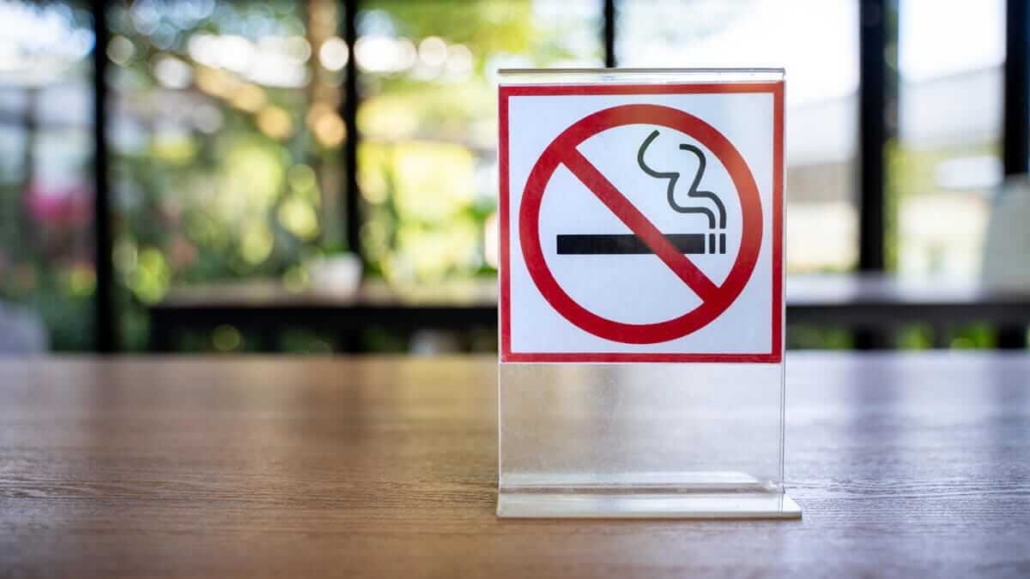
A small No smoking sign at the entrance, on the balcony door and in the bedrooms is a quiet nudge. Keep the wording identical to your listing, and leave fine amounts and threats off it. If you offer an outdoor spot, a second sign pointing to it does more than a warning ever will.
Send a Friendly Reminder Through Airbnb Messaging
Airbnb now offers your house rules as a pre-written quick reply that matches your listing. Sending it with your check-in details, or on the first evening, takes seconds and keeps a record in the message thread.
Design an Effective Onboarding Procedure
If you or a co-host meet guests in person, take a minute to show them the smoke alarms and, if you have one, the outdoor smoking spot. Mention the No smoking rule as something they already agreed to, not as a new warning. A friendly walkthrough often lands better than any written rule.
Educate Guests on Local Smoking Laws
In some places, smoking indoors breaks more than your house rules. Provincial and municipal laws on tobacco, vaping and cannabis differ across Canada and change from time to time, so link guests to the official local source instead of paraphrasing it. Your welcome guide is a natural place for that link, next to directions to the outdoor spot.
Screen Bookings Before They Become Problems
Careful screening still lowers the odds of a smoke-filled turnover. When a guest requests or books, you can see the ratings past hosts gave them. Hosts can rate guests from 1 to 5 stars on three categories: cleanliness, house rules and communication. A pattern of low house rules scores is worth a closer look at the written reviews.
Keep the conversation on Airbnb messaging. If a guest asks whether they can smoke inside, answer politely and point to the rule. If a guest tells you before check-in that they intend to break a house rule, Airbnb lets you cancel the reservation without fees or other consequences.
Regular Inspections and Maintenance
After each guest’s stay, check for signs of smoking before your cleaner starts. The sooner you spot a problem, the stronger your evidence and the better prepared you’ll be for the next guests. Look for:
- A stale smell in curtains, cushions, mattresses and carpets
- Ash or cigarette butts on balconies, in planters and in bathroom bins
- Burn marks on furniture, bedding and counters
- Yellow film on walls, ceilings or light fixtures
- Covered, disconnected or removed smoke alarms
Photograph what you find right away, before anything is cleaned. If the odour needs specialist treatment, get a written estimate or invoice from a professional cleaning service. Keeping a simple log of incidents by season and booking type also shows you where your rules or reminders need adjusting.
The Best Vacation Rental Cleaning Apps
What to Do If a Guest Smokes in Your Airbnb
Even with every precaution, it happens. What you do next depends on whether the guest is still there.
During the Stay
Message the guest through Airbnb, calmly, and refer to the No smoking rule on the listing. Most guests stop at that point. If the guest breaks the rule during the stay, Airbnb allows you to cancel the reservation without fees or other consequences. You can also contact Airbnb for help with the next steps. Guests who violate Airbnb’s policies may be suspended or removed from the platform.
After Checkout: Request Reimbursement Through Airbnb
Airbnb’s host damage protection, part of AirCover for Hosts, covers extra cleaning for smoke odour removal. The process runs through the Resolution Center:
- Document the issue with photos or videos, cleaning estimates and receipts.
- Within 14 days of the guest’s checkout, file a reimbursement request in the Resolution Center.
- The guest has 24 hours to respond.
- If they don’t respond, pay only part, or decline, submit the request under host damage protection, and Airbnb Support reviews it.
Three conditions in the Host Damage Protection Terms shape a smoking claim. The smoking has to violate your house rules, which is why the standard rule matters so much; the terms name tobacco, cannabis and e-cigarettes. Only cleaning costs above the cleaning fee you charged are paid. And you need evidence the guest or their invitee caused the odour, such as photographs, a professional assessment, smoke detector readings or the guest’s own admission. Airbnb may also ask for receipts from an independent third party it approves.
Our step-by-step guide to the Airbnb Resolution Center walks through the request screens. If a request is turned down, see the common reasons for AirCover claim rejection before you resubmit.
Feedback Loop: Fair Ratings and a Smoke-Free Listing
Your review of the guest is how the next host learns what happened. Rate house rules accurately and describe what happened in factual terms. Future hosts will see it, and Airbnb uses guest ratings to check whether guests follow its ground rules.
On your own listing, a smoke-free home is a selling point for many travellers. Mention fresh air and non-smoking rooms in your description, and let reviews that praise a clean-smelling home speak for themselves. Avoid offering anything in return for a review, though. Airbnb’s rules on authentic reviews don’t allow reviews in exchange for something of value, like a discount.
Engage with a Community of Like-Minded Hosts
Host forums and local host groups are a good place to compare notes on signs, sensors and cleaners who specialise in odour removal. Treat policy tips from forums with care, though. Many posts predate November 2026, and advice about fines or deposits may no longer apply.
Conclusion: A Multi-Faceted Approach to Discourage Smoking
Ensuring a smoke-free environment in your Airbnb property still takes several layers, but the layers have changed. A standard No smoking rule that guests see before they book does most of the work. Add gentle reminders that repeat it, working alarms, an outdoor alternative where your building allows one, and a careful inspection after every stay. Together, they discourage smoking on your Airbnb far better than fines ever did. When something slips through, the Resolution Center and AirCover handle the cost.
If you’d rather have someone else set up the listing, inspect after each stay and handle the paperwork, MasterHost’s Airbnb management services can take it on.
References
- Airbnb Help Center, Reasonable house rules
- Airbnb Resource Center, Important changes to house rules (October 20, 2026, updated November 3, 2026)
- Airbnb Help Center, Add house rules to your listing
- Airbnb Help Center, Pricing and payment transparency
- Airbnb Help Center, Add local rules to your home listing
- Airbnb Help Center, Restrictions on security cameras and other devices in homes
- Airbnb Help Center, Your reviews from hosts
- Airbnb Help Center, Host damage protection
- Airbnb Help Center, Host Damage Protection Terms